As of January 2026, every Facebook and Instagram ad you run is being filtered through Meta's new Andromeda retrieval algorithm. So, if you've noticed an increase in your ad costs or performance dropping off faster than usual, that’s the reason.
Andromeda is more than just a platform update, it's a fundamental shift in how Meta matches people to ads, and advertisers who haven't adapted their creative strategy are being left behind.
This article is a deep dive into what's actually happening, what these changes mean for Australian service businesses and how to adjust your strategy without going over budget and wasting time testing 100 different ad variations.
What Is Andromeda and Why Does It Matter?
Andromeda is Meta's new AI-powered ad delivery system. According to Meta’s engineering team, Andromeda has seen over 100x improvement in feature extraction latency and throughput versus prior CPU‑based components. Built on NVIDIA's GH200 chip, it also increases model capacity by around 10,000x, which means it can handle a much larger pool of eligible ads simultaneously.
In practical terms, this means that Meta can now test your ads more aggressively across more people in less time. This is an overall positive thing, but it does come with a catch.
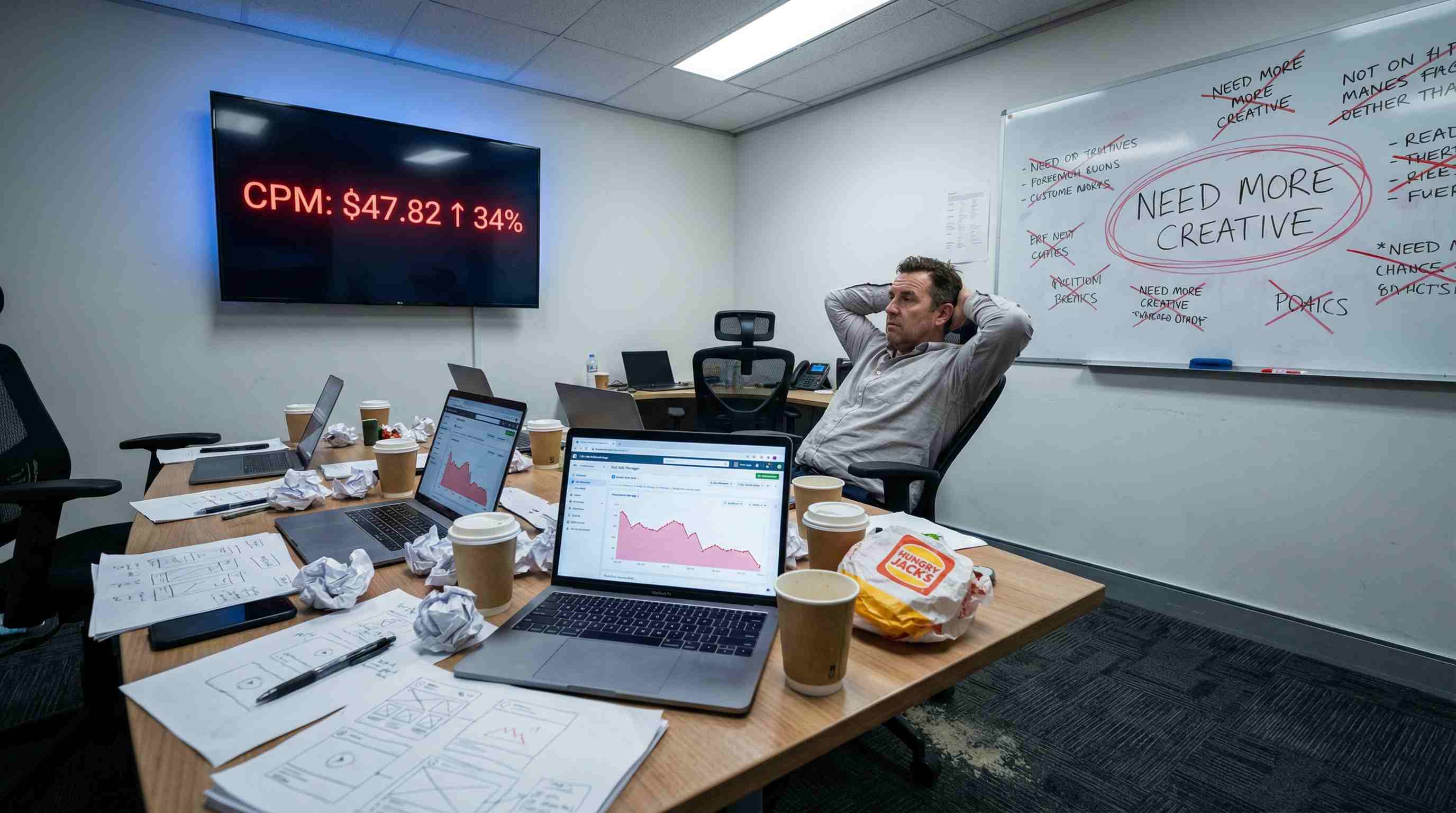
The algorithm goes through creative output faster than before, so Ads that used to perform well for weeks now fatigue in a matter of days. This means that if you're not feeding the system enough genuinely creative and different content, your costs will go up.
The Real Impact: What We're Seeing With Clients
When we are auditing a new client account or reviewing a potential client’s existing campaigns, a common theme often quickly emerges: accounts which run just two or three ads per campaign saw ad cost increases of 20-30% in late 2025 and early 2026, especially for those split across several audience targets.
The businesses who'd already moved to a creative-first strategy, such as wider ad variation, less audience segmentation and genuine diversity in their messaging, tended to avoid this increase in costs.
Here's a closer look at how we changed our strategy since the debut of Andromeda.
What We're Doing Differently
Genuine Creative Diversity, Not Cosmetic Changes
The biggest shift is the realisation that creative diversity now matters more than creative volume. Meta's algorithm knows if you've simply changed a headline or swapped a colour; that's not diversity, it's the same ad with a slight tweak.
Real diversity can only be achieved by first understanding that different people respond to different messages, which is why we now plan or ad campaigns around distinct personas: what problems keep customers up at night, what solutions appeal to them, what tone resonates?
This is evident in the copywriting. For a family law firm, one ad might speak to someone who's anxious about legal fees and custody arrangements, while another is aimed at a person who wants to take a collaborative approach and avoid conflict.
This is much deeper than simply writing a different headline, it’s taking a fundamentally different approach for each prospective customer.
Multiple Primary Texts Within Single Ads
Meta allows up to five primary text variations and five headline variations within a single ad. We use this heavily, but only in cases where those variations are genuinely different.
A video ad for a dental practice might have five primary texts:
- One focused on anxiety-free treatment
- One highlighting payment plans
- One emphasising convenience and speed
- One showcasing results and before/afters
- One addressing specific procedures for cosmetic outcomes
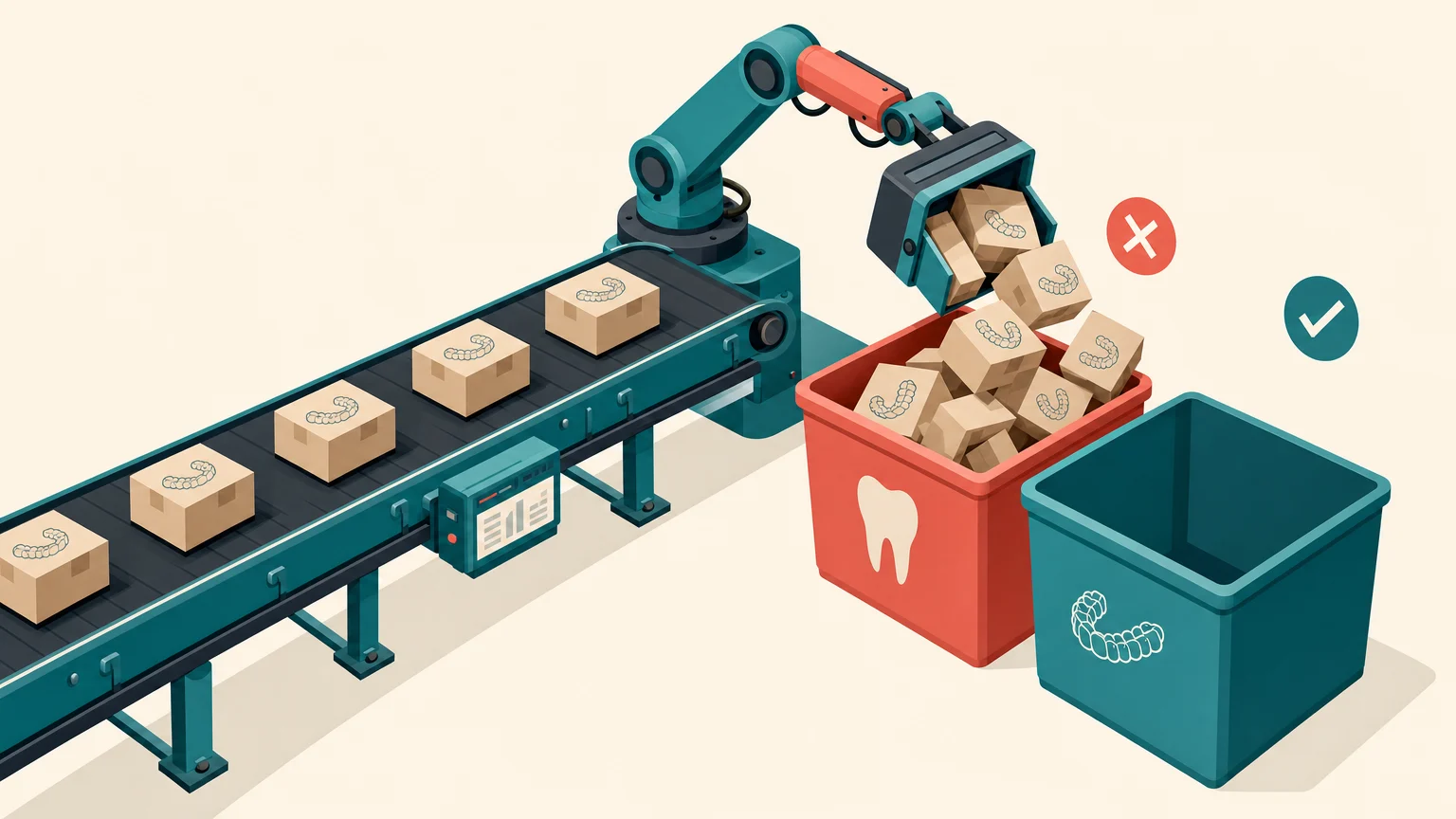
This lets Meta's algorithm find the right message for the right person without having to create five separate ads. The ad itself can work for multiple audiences while the copy does the actual targeting.
Format Diversity: Video, Carousel, Static Images
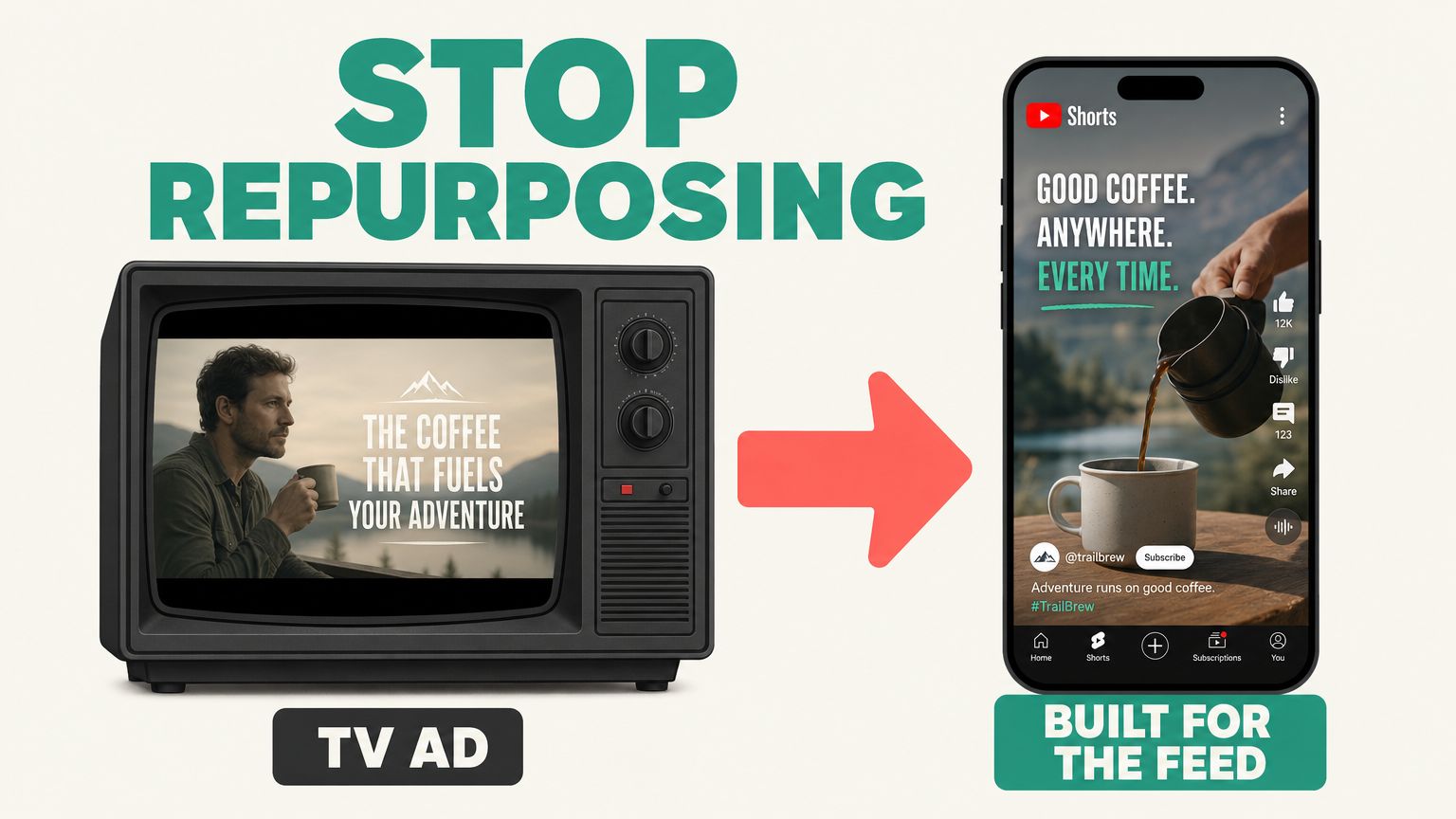
Our strategy is to try and include at least one video, one carousel and several static image ads in every campaign. We know that different people respond to different formats, and Andromeda rewards variety.
Some people scroll straight past videos but will stop for a well-designed static image, while others prefer not to read text-heavy static ads but will gladly watch a 15-second video. Carousels work particularly well for showcasing multiple services or telling a story in stages.
In this case, the format itself becomes part of the diversity strategy.
Fewer Campaigns, Creative as Targeting
The most common approach used to involve heavily segmenting audiences. For example, there might be one campaign for people aged 25-34 who are interested in family law, and another for people 35-44 in the same area, etc.
This might have made sense when audience targeting was the primary optimisation lever, but it’s now far less effective under Andromeda. The algorithm is powerful enough that targeting broader audiences with diverse and creative ads will outperform narrow targeting.
In light of the recent rollout of Andromeda, we've consolidated our campaigns significantly. Instead of five campaigns each running three ads, we run one or two campaigns with 15-30 genuinely diverse ads, and Meta shows the right ad to the right person based on who responds to which message.
The Data Layer: Why CAPI Matters More Than Ever
An oft-neglected part of the "Andromeda creative fatigue" conversation is that none of this works without proper conversion tracking.
Facebook's Conversions API (CAPI), the server-side tracking that sends conversion data directly from your CRM to Meta, has evolved from a "nice to have" to become an essential part of successfully advertising with Meta.
If you're relying solely on the Meta Pixel, you're missing 60% or more of your conversions due to iOS privacy updates, ad blockers and browser restrictions.
For Andromeda specifically, this is important because the algorithm optimises based on the conversion data it receives. If it is only seeing 40% of your actual conversions, it will end up optimising toward the wrong patterns, leaving you with higher costs, worse results and no idea which ads are actually working.
We integrate CAPI for all our clients who spend more than a few hundred dollars monthly on Meta ads. For service businesses, this usually involves connecting HubSpot, GoHighLevel or whatever CRM they use directly to Meta in order to get reports on qualified leads, booked consultations and, eventually, clients signed.
The challenge is that this requires enough data volume for Meta's algorithm to learn effectively. Smaller budgets (under $1,500-2,000 per month) can sometimes struggle because there just aren't enough conversions for the AI to fully optimise. Andromeda assumes everyone's working at scale, which isn't always the case.
We've had great success using conditional logic in forms and landing pages to improve lead quality upfront. If Meta's getting better leads more consistently (even if there are fewer of them), the algorithm has an easier time finding more people.
How Many Ads Do You Actually Need?
The internet is full of grand claims regarding how best to approach Andromeda, with some saying you’ll need more than 100 ads and a complete refresh of everything every week, but based on what we're seeing, that’s simply not true.
For the majority of advertisers, 3-5 creative variations per test is the sweet spot, with between 15 and 30 ads running across a campaign proving most effective for our clients. This provides enough diversity for Meta to optimise without diluting your budget to the point that no individual ad gets enough data.
You should expect only 1-3 out of every 10 creatives to become true winners. The point isn't for everything to work every time, it's for the algorithm to get enough data to find out what does work.
Something we've noticed is that Meta still heavily favours one or two ads within any given set. This has always been the case, and Andromeda hasn't changed that behaviour much. Within 24-48 hours of launching a new creative, Meta typically decides its favourites and gives them the majority of impressions.
However, it seems that having variety available seems to help. Even ads that don't get heavy rotation appear to serve a purpose, as they're shown at the right moments when the primary ads might have fatigued or when a specific person fits that message better.
As long as secondary ads are getting some impressions, even if they’re limited, it's worth keeping them active for this reason.
Creative Refresh Cycles: How Often Is Often Enough?
Andromeda has sped up the rate of fatigue significantly, with ads that used to run for months now peaking and starting to decline within just 2-4 weeks.
The refresh cycle depends on spend:
- Small accounts (under $3,000/month): monthly creative refresh
- Larger budgets: every 7-14 days for at least some new creative
Keep a close eye on your frequency and CTR metrics. If frequency exceeds 3.0 and CTR drops 30% or more, you need some fresh creatives.
Now, a "Refresh" doesn't simply mean replacing everything, it involves introducing new angles, new formats and new hooks while keeping what has worked. We typically retire the bottom 20-30% of performers and introduce new tests every two weeks.
What's Overhyped vs What's Real
Let's separate what really works from the hype.
Overhyped: you need 100 ads running simultaneously and to produce new creative every single week.
Reality: the majority of service businesses see strong results with 15-30 genuinely diverse ads that are refreshed every 2-4 weeks based on performance and budget size. The keyword here is "genuinely," as Meta can tell when you've just made a cosmetic change.
Overhyped: audience targeting is dead.
Reality: audience targeting is less important than before the release of Andromeda, but it's not completely irrelevant. Broader audiences paired with creative diversity tend to outperform narrow targeting, but starting with a reasonable geographic and demographic foundation still makes sense.
Real: creative fatigue happens faster now, and Meta will punish you with higher CPMs if your creative output is limited or too similar.
Real: CAPI is no longer optional for anyone serious about Meta ads performance.
Real: creative production is now the bottleneck. The brands that turn creative production into a repeatable system will outperform those still treating it as something occasional.
What We're Watching Out For
Here are a few things on our radar:
How this affects Advantage+ campaigns: Meta has positioned its Advantage+ automated campaigns as a way to simplify setup and rely more on AI‑driven optimisation, which can feel like a “set‑and‑forget” solution for busy advertisers. If Andromeda’s creative demands continue to extend into these formats (and they likely will), treating them as truly “set‑and‑forget” becomes much harder in practice.
Whether smaller budgets can compete: Andromeda assumes scale and data volume. If Meta doesn't adjust for smaller advertisers, there's a risk that only businesses with larger budgets can feed the algorithm effectively. We're watching to see if this creates a growing performance gap.
Conversion data from CAPI vs what actually converts: we're feeding Meta better data through Conversions API, but we're also tracking what happens after the lead comes in. Not all leads that Meta optimises toward actually convert to paying clients. This gap between what Meta thinks is a good lead and what actually becomes revenue is something we're monitoring closely.
What to Do If You're Behind
If you're still running 2-3 ads per campaign with heavy audience segmentation, here are the steps you should take in order of priority:
- Set up CAPI if you haven't already. Without accurate conversion data, everything else is guesswork.
- Consolidate campaigns and broaden audiences. Fewer campaigns, more creative.
- Audit your creative for genuine diversity. Do your ads actually look and sound different, or did you just change the headline? Be honest with yourself.
- Develop a content production system. Whether that's working with a designer, using a template system or partnering with an agency, you need a way to create 5-10 new ad variations each month without it feeling like a part-time job.
- Track frequency and CTR religiously. When performance drops, don't just increase the budget, refresh the creative.
Meta has made it clear that Andromeda isn't going anywhere, so the businesses that adapt their creative strategy now will spend less and get better results than those still trying to make the old playbook work.
For Australian service businesses, law firms, dental practices, financial advisers and aged care providers, this means rethinking creative as your primary lever, not an afterthought.
The targeting will sort itself out. The creative won't.
Ready to stop fighting Andromeda and start using it? Leadtree helps Australian law firms, financial advisers and professional services rebuild their Meta campaigns around creative diversity, CAPI and data‑driven structure.
If your costs are climbing or performance has dropped post‑Andromeda, we’ll audit what’s actually happening in your account and come up with a practical fix.
Book a free 30‑minute Meta ads audit call here: https://www.leadtree.agency/product/book-call