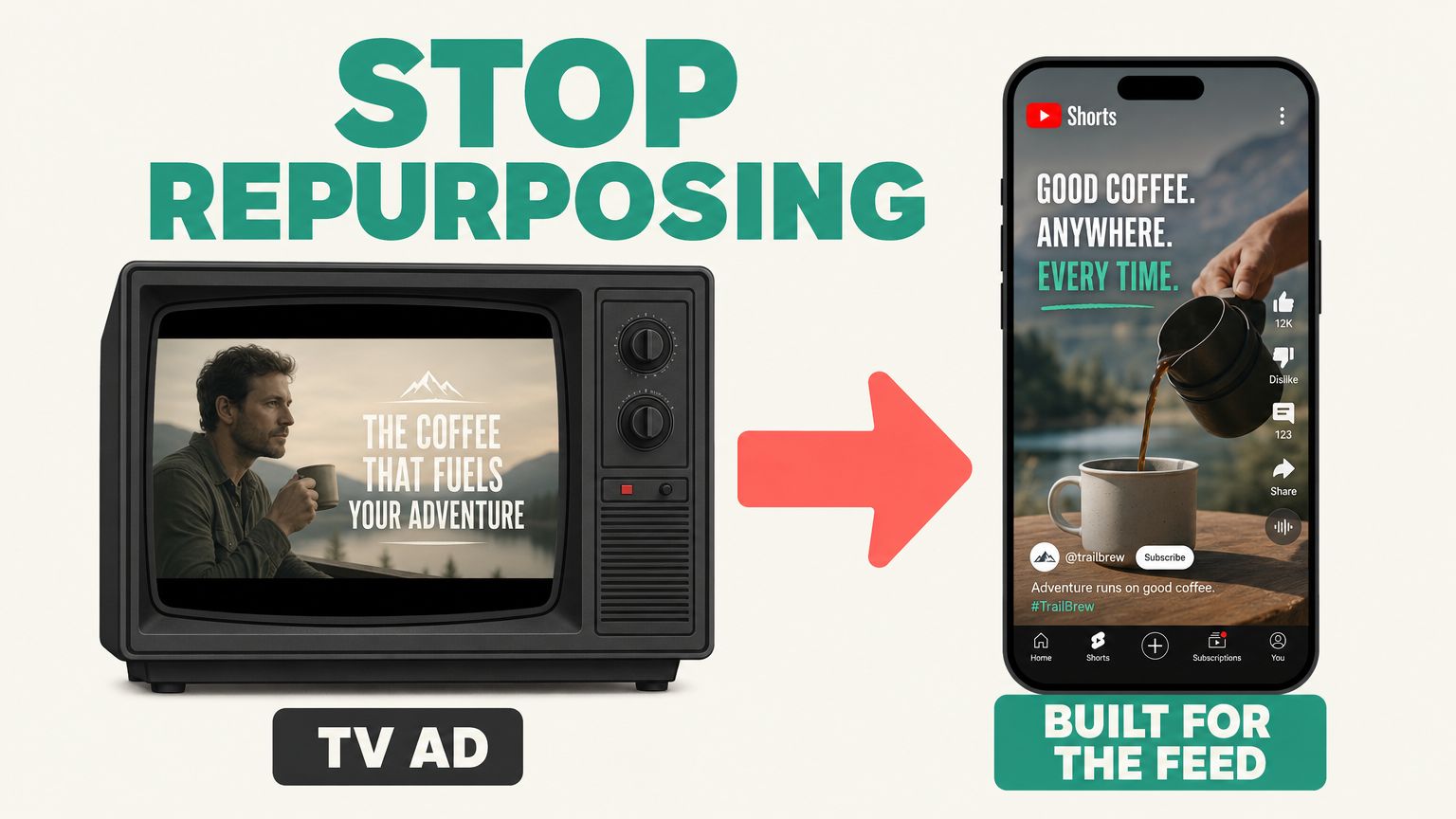
Why are we publishing more blogs, videos and social posts than ever, but the cost-per-lead keeps climbing?
That’s the question that keeps law firm partners and practice owners up at night. And the answer isn't what most marketing agencies will tell you. You don’t need better writers, it's not that your content isn't "engaging enough" and it's definitely nothing to do with how frequently you post.
The problem is strategic, not creative. Many Australian service businesses have fallen into the content volume trap, which is when they believe that more content automatically translates to more leads.
However, the data proves otherwise.
The Efficiency Paradox: When More Becomes Less
Content marketing delivers impressive headline metrics. It costs less than outbound marketing and produces leads that are more likely to convert, making it the obvious choice for service businesses looking to scale their lead generation. On paper, at least.
Unfortunately, the majority of Australian service businesses create content without strategic guidance on where it should go, how it should be adapted for each platform and even who should actually see it.
This results in a bottleneck for businesses like law firms, dental practices and allied health clinics, who end up producing and distributing content like they're running media companies instead of service businesses with a clearly-defined target market and straightforward conversion goals.
The result is rising content costs alongside flat or declining lead quality, which is a negative at both ends of the equation.
The Channel Allocation Problem No One Talks About
Here’s where Australian service businesses actually distribute their content:
- Facebook: 17.2 million monthly active users
- Instagram: 14.3 million monthly active users
- TikTok: 8.01 million monthly active users (up 34% year-on-year)
- LinkedIn: 17 million total users
Most service businesses post the same content, maybe reformatted slightly, to all these channels.
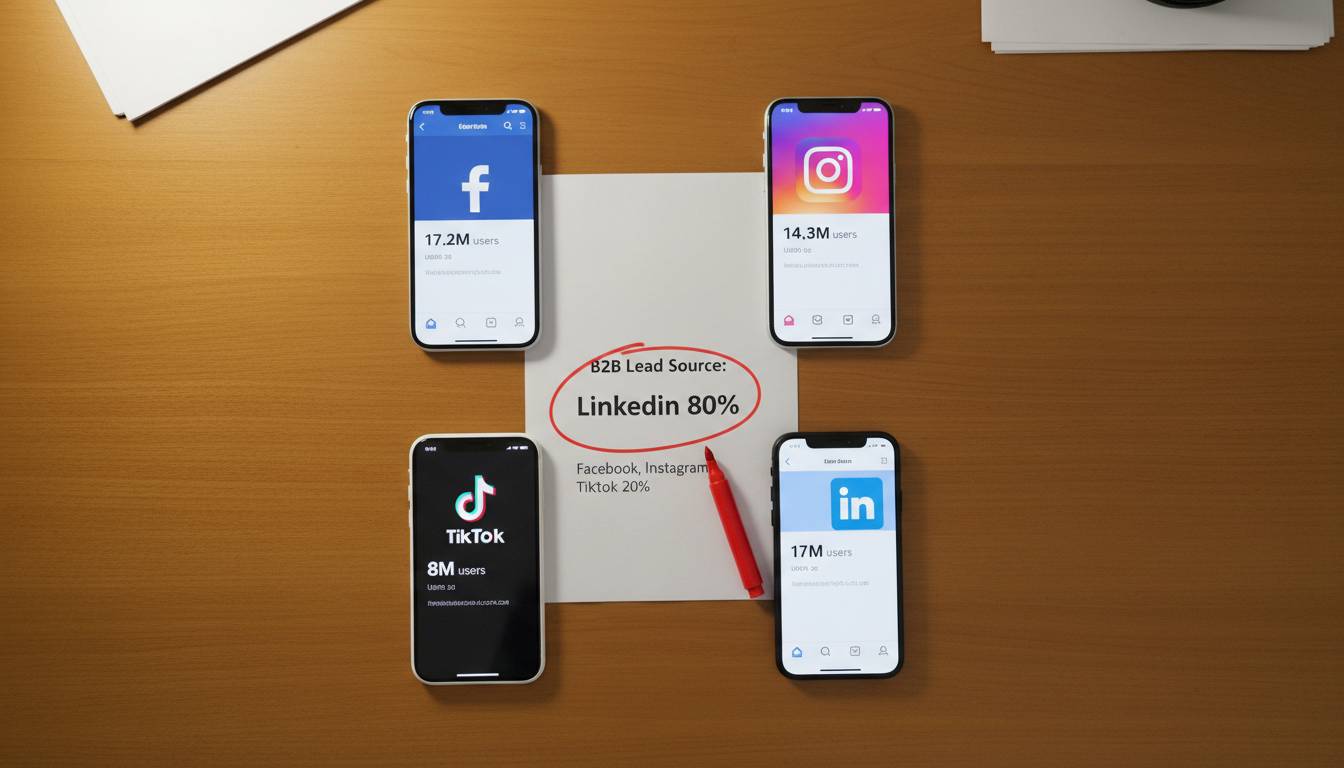
The problem is that 80% of B2B leads on social media come from LinkedIn.
Not Facebook. Not Instagram. And definitely not TikTok!
Yet service businesses continue to spread their content equally across all platforms because "that's where the audience is." But although the audience might indeed be there, ”buying intent” is not.
A law firm partner scrolling through LinkedIn during work hours is in a completely different mindset than the same person using Instagram in the evening. The content that works in one context fails in the other, not because the quality is poor, but because the intent isn’t properly aligned.
This is why cost-per-lead keeps rising. You end up paying to create and distribute content to audiences who aren't in a buying mindset, while under-investing in the channel where professional services buyers actually make decisions.
The Desktop-to-Mobile Conversion Gap
Another startling statistic that helps to explain the decline in lead quality is that desktop users convert at 3.82% and mobile users convert at 1.32%.
It’s becoming increasingly common for Australian service businesses to take a mobile-first approach to content, such as short videos, Instagram stories and TikTok clips. This might be where engagement metrics look good, but engagement doesn't pay the bills. Conversions do.
The reality is that around half of all searches have local intent, and 78% of mobile local searches lead to store visits within 24 hours. That's wonderful for retail businesses, but for professional service providers the buying journey is much longer and mobile is often the research phase rather than the conversion phase.
A person searching for "emergency dental care open now" on their mobile is ready to convert. A person watching your TikTok video about "5 signs you need a root canal" is not.
Most service businesses optimise for the second scenario and neglect the first.
Voice Search: The Conversion Channel You're Ignoring
Around 57% of Australians use voice search, with 20% of mobile queries now voice-based.
This has had a drastic effect on content strategy. For example, a person asking their phone to "find a family lawyer near me with free consultation" isn't going to end up on a 2,000-word blog post titled "The Comprehensive Guide to Family Law in Australia."
Even if your content is well-written and comprehensive, it won’t show up on a voice search because it wasn't created with those kinds of queries in mind.
Conversational keywords have shown to result in higher conversion rates compared to traditional ones because of their specificity and alignment with user intent. However, the majority of Australian service businesses are still creating content solely for people who type.
This isn't a small opportunity for incremental optimisation, it’s a fundamental shift in how people find service providers, and most firms are completely unprepared for it.
The Local SEO Advantage You're Leaving on the Table
Here's where the data gets really interesting for service businesses:
- Around 80% of local searches result in a conversion.
- Complete Google Business Profiles receive more clicks than incomplete profiles
- Most consumers trust online reviews as much as personal recommendations
That’s a far cry from what most service businesses are actually investing in, like generic blog content, social media posts and basic video production.
The highest-ROI activities for service business lead generation aren't content creation at all, they're things like local search optimisation, review generation and astute Google Business Profile management.
And still, most Australian service businesses spend more time writing blogs that rank on page 3 for competitive keywords than they do optimising their GMB profile and systematically generating reviews from satisfied clients.
This is the content-to-lead pipeline bottleneck in action; investing in activities that feel productive (publishing content) while neglecting activities that actually generate qualified leads (local search optimisation).
The Attribution Blind Spot
An interesting question for anyone with a service business is: which specific piece of content generated your last 10 leads?
If you don’t know, you probably have a problem with attribution, which means you can't optimise your content strategy.
With 59% of online users relying on social media presence when deciding to purchase from a small business, it’s a marketing opportunity that’s too big to miss out on. But "social media presence" doesn't tell you whether it was your LinkedIn article, Instagram story, Facebook post or TikTok video that actually inspired someone to go from awareness to consideration.
Without proper attribution, service businesses simply default to volume. That's not a winning strategy, it’s just expensive hope.
The service businesses who have declining cost-per-lead aren't creating less content, they're creating strategically targeted content with clear attribution tracking. This way, they know exactly what channels drive qualified leads, the content formats that convert and which topics attract their ideal clients.
They’re thriving while everyone else is hoping something sticks and spending more to compensate for the lack of data.
Email: The Conversion Channel You're Neglecting
Email marketing delivers a huge ROI. In fact, it’s higher than social media, paid search and content marketing.
Despite this, many Australian service businesses still don’t have a systematic email nurture sequence. A prospect reads a blog post, maybe downloads a guide and then... nothing. No follow-up. No relationship building. No conversion path.
Content generates awareness, but emails generate conversion.
If you're investing heavily in content creation but not building email sequences to nurture those leads, you won’t see full results.
Here's what actually works: a prospective customer finds your content through a search or social media, enters your email list through a valuable lead magnet, receives a 5-7 email sequence over 2-3 weeks that builds trust and demonstrates expertise, and then books a consultation with you.
That's a complete pipeline, while most service businesses stop after step one and call it "content marketing."
The TikTok Distraction
TikTok has 8.5 million monthly active users in Australia, making it the fastest-growing social platform in the country. Maybe that’s why every marketing publication is screaming for everyone to "get on TikTok before it's too late!"
Here's the contrarian take: for law firms, dental practices and allied health clinics, TikTok is just a distraction.
Not because the platform doesn't work or video content isn't valuable, but because the buying intent on TikTok is fundamentally misaligned with how professional services work.
A person scrolling through TikTok is looking for entertainment, not evaluating which law firm to hire for their commercial dispute. They might watch your 60-second video about "3 contract mistakes small businesses make," but they're not in buying mode.
Meanwhile, that same person on LinkedIn is in problem-solving mode not entertainment mode, which is a different mindset altogether.
The cost-per-lead on for service businesses on TikTok is actually higher than on LinkedIn, local search and email marketing, but service businesses keep investing in it because the growth metrics look impressive.
Growth in the wrong direction is still the wrong direction.
What Actually Works: The Strategic Reduction Approach
Conventional wisdom is to simply "create more content," but the data suggests that the inverse is actually true for service businesses: create less content, distribute it more strategically and measure attribution rigorously for success.
Here's an example scenario:
Business A: publishes 20 blog posts monthly, posts daily across 5 social channels and creates 3 videos per week, but has no email sequences, attribution tracking or local SEO focus. This means the cost-per-lead rises while lead quality declines.
Business B: publishes 4 strategically targeted pieces monthly, 1 LinkedIn article, 1 local search optimised blog post, 1 email sequence and 1 review-generation campaign, with complete attribution tracking and systematic GMB optimisation. The cost-per-lead falls and lead quality improves.
Business B generates more qualified leads per dollar spent, not because their content is "better," but because every piece of content serves a specific strategic purpose and is distributed to channels with buying intent.
This is what Leadtree has seen time and again while working with law firms and healthcare practices across Australia. The firms that reduce content volume while increasing strategic focus consistently outperform the firms that chase volume metrics.
The Australian Service Business Reality
Australian market conditions affect service businesses in ways that generic content marketing advice doesn't account for:
- The Australian SEO market is $1.5 billion and growing 12% annually, which means competition for generic keywords is intensifying
- Voice search adoption in Australia is ahead of global trends, creating an early-mover advantage for firms that optimise now
- Local search intent dominates for service businesses, yet most content strategies ignore geographic precision
LinkedIn penetration in professional services is high, but most firms under-invest in the platform relative to its lead generation potential
The Bottom Line
The firms thriving in this environment aren't the ones creating the most content, they're the ones aligning their content strategy with buyer intent and conversion optimisation.
That means:
- Prioritising LinkedIn over Instagram and TikTok for B2B service businesses
- Optimising for voice search and conversational queries, not just traditional keywords
- Building comprehensive email nurture sequences, not just publishing blog posts
- Investing in local SEO and review generation over generic content volume
- Implementing attribution tracking so you know what actually generates leads
The Australian service businesses seeing declining cost-per-lead aren't creating less content because they're lazy, they're doing it because they know that precision beats volume every time.
Ready to fix your content-to-lead pipeline? Leadtree specialises in content strategy and lead generation for Australian service businesses. We don't just create content; we build complete pipelines that turn content into qualified leads. Book a 30-minute free call to discuss how we can help today: https://calendly.com/leadtreemarketing/30min