Think about the last service business you hired. It might have been a lawyer, an accountant, a tradesperson or a dentist. Before you called them, you almost certainly read a review, got a recommendation from someone you know or did a quick search to see if they were legitimate.
Now that check is likely being made by an AI assistant instead of a Google results page. You ask ChatGPT or Gemini for "a good employment lawyer in Brisbane," and it gives you two or three names.
You didn’t have to scroll through ten blue links or separate the wheat from the chaff manually, something decided which names should be put in front of you.
That something runs on trust signals, and it is fundamentally changing which businesses are successful.
For twenty years, success was about being found. The goal was to rank on page one, show up in the map pack, buy the ad above the fold. Nowadays, success comes from being recommended by people who are harder to please than ever and machines that are getting better at telling who is genuinely credible everyday.
This is the shift from being found to being trusted, and we’re going to share the model we use to think about it and show you what your service business can actually do about each layer.
Why Trust Became the Differentiator
The internet has more content than anyone can read, and more is added everyday. A lot of it is now AI-generated, with much saying roughly the same thing. And people know.
The natural response to this flood of plausible-sounding content is getting more careful, not less.
This means buyers verify more; they cross-check recommendations against reviews, they look for a real person to confirm the advice they received is sound and they notice when a certain brand keeps appearing in places they trust.
At the same time, the AI systems that make those decisions have been trained to favour sources they can treat as credible. They aggregate reviews from across the web, use what they find to see who has genuine expertise and tend to go with recognisable brands.
The Edelman Trust Barometer tracks how much trust drives decisions, and that pressure has only increased with the advent of AI.
Trust has always been a key factor in how people choose service businesses. What’s changed is that it is now the part machines optimise for too, making it a competitive advantage you can build deliberately.
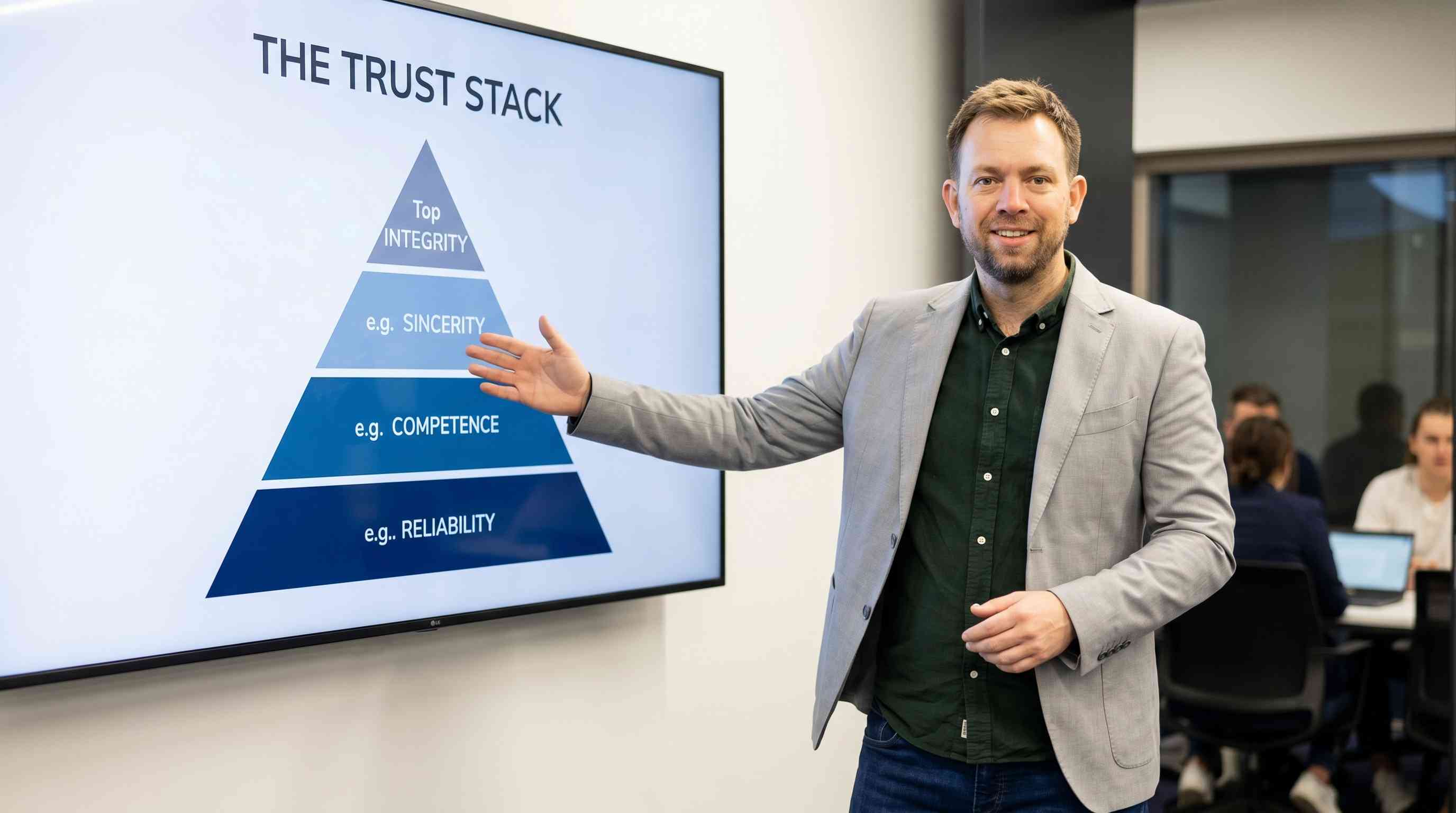
The Trust Stack
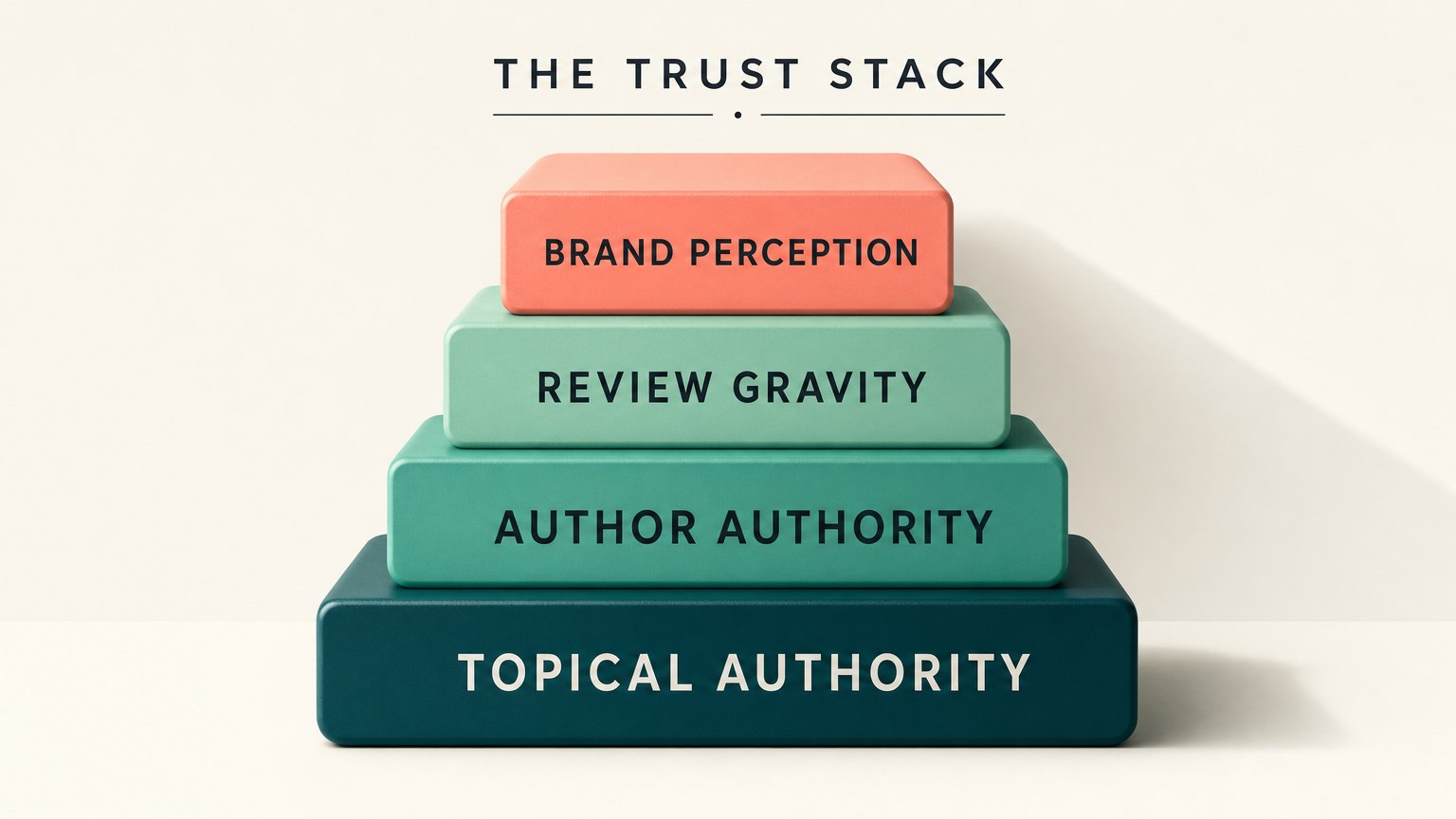
We call our model the Trust Stack. It consists of four layers that are stacked together to make it more likely you’re recommended by both people and AI systems.
We treat it like a stack so that the layers all reinforce each other: strong reviews make your expertise more believable and genuine expertise earns better reviews. Becoming a recognisable brand makes both hit harder.
Most businesses just pull one lever and then wonder why the needle hasn’t moved. The Trust Stack works because you build it in layers, not in isolation.
| How they differ | TPD claim | Workers' compensation |
|---|---|---|
| Where the money comes from | Insurance held inside your superannuation fund | Your employer's workers' compensation insurer |
| What it covers | A lump sum payment if you are totally and permanently disabled | Weekly payments, medical expenses, rehabilitation, and potentially a lump sum for permanent impairment |
| Who manages it | Your super fund's insurer | Your employer's insurer (e.g. WorkCover in Queensland, icare in NSW, or a self-insurer) |
| Eligibility criteria | You must meet the TPD definition in your policy | You must have a work-related injury or illness |
1. Topical Authority
The first layer involves going genuinely deep on the subjects you are actually an expert in. Not a cursory page on every keyword, but the topics your clients care about covered with depth, specificity and original insight that surpasses anyone else working in your space.
Unique value matters most here. AI systems and search engines have already taken in the generic version of almost every answer, so what earns a recommendation are the things only you can say: your own data, your own tools and your own hard-won idea of how something really works.
A criminal lawyer who publishes genuinely useful detail on how a specific charge plays out in their state will get referenced ahead of a firm that has fifty pages full of shallow information.
Depth on what you truly know beats breadth on what everyone knows.
Learn how to build topical authority that Google (and AI) actually rewards
2. Author Authority
The second layer is who is seen to be speaking.
Content that’s attributed to an actual person with a genuine reputation carries more weight than content from a faceless brand, both with readers and the systems that rank it.
This is the core of what Google refers to as E-E-A-T: Experience, Expertise, Authoritativeness and Trustworthiness. The first E, Experience, was added to reward content from people who haven’t just researched something, but actually done it.
There is a technical aspect that quietly does a lot of work: marking up your authors with structured data and connecting an author to their credentials using Person schema so machines understand a real, qualified human is behind the content.
Most service businesses skip this entirely, leaving an easy signal on the table.
3. Review Gravity
The third layer is the pull of your reputation from outside your own website.
Google reviews are still the foundation for most local service businesses because they are the single most influential trust signal a buyer sees.
But the scope of trusted sources is widening all the time. Platforms like Trustpilot and industry-specific directories are being indexed and read more and more, while AI systems aggregate what they find across all of them.
They don’t just consider your star rating; they read the sentiment, the specifics and the pattern of positive and negative sentiment together.
The two most significant implications here are that reviews on a single platform are no longer enough, and a thin or stale review profile is now seen as a visible gap because the AI making a recommendation can see how you compare across the entire internet.
Research from BrightLocal shows how important reviews are for someone choosing a local business, and that influence now extends to the AI layer sitting on top.
4. Brand Perception
The fourth layer is often taken the least seriously, but is fast becoming the most decisive.
The internet is saturated with similar-sounding content, making recognisable, trusted brands what get chosen and cited more and more.
When anything can be seen as plausible, familiarity becomes a shortcut. People are likely to pick names they have seen before, and AI systems lean towards the brands that appear consistently and are spoken about positively across many sources.
Word of mouth has always been the most trusted form of recommendation, a point made by Nielsen for years, and having a strong brand is word of mouth on a larger scale.
For a service business, brand is not a logo, it is the sum of every consistent, professional, helpful impression you leave on your site and in your content and reviews.
How the Layers Work Together
The Trust Stack is not a checklist where you just tick one box and move on to the next. It compounds:
- Topical authority gives reviewers and AI something substantive to point to.
- Author authority makes that substance believable.
- Review gravity proves other people agree.
- Brand perception ties it together so the whole thing is recognisable and repeatable.
If you only do one part you’ll only get a modest result. A firm with brilliant content but no reviews looks unproven. A firm with great reviews but shallow, anonymous content looks like it just got lucky.
The businesses getting recommended by both people and machines build more than one layer at a time.
Where to Start
You won’t build all four layers overnight, and we don’t recommend you try. Pick the weakest one and start from there.
- Reviews thin or on a single platform? Fix that first because it’s the fastest-moving signal and the most visible gap.
- Content broad but shallow? Choose your three most important topics and go genuinely deep on them.
- No named author? Attribute content to the real expert and add the schema.
- Your brand looks different everywhere? Make it consistent.
The order you do this in is less important than the honesty of the audit. Look at your own Trust Stack the way an AI assistant would: can it find depth, a credible human, corroborating reviews and a recognisable brand?
Wherever no is the answer is where you should start.
This is the work we do through our SEO services for service businesses: building the layers in the right order so they reinforce rather than scatter. Being found is still important, but being trusted is what now turns a search or a question to an AI assistant into a client.
If you want a clear-eyed read on where your own Trust Stack is strong and where it is leaking, we are happy to take a look and tell you straight.
Book a time here: https://www.leadtree.agency/product/book-call