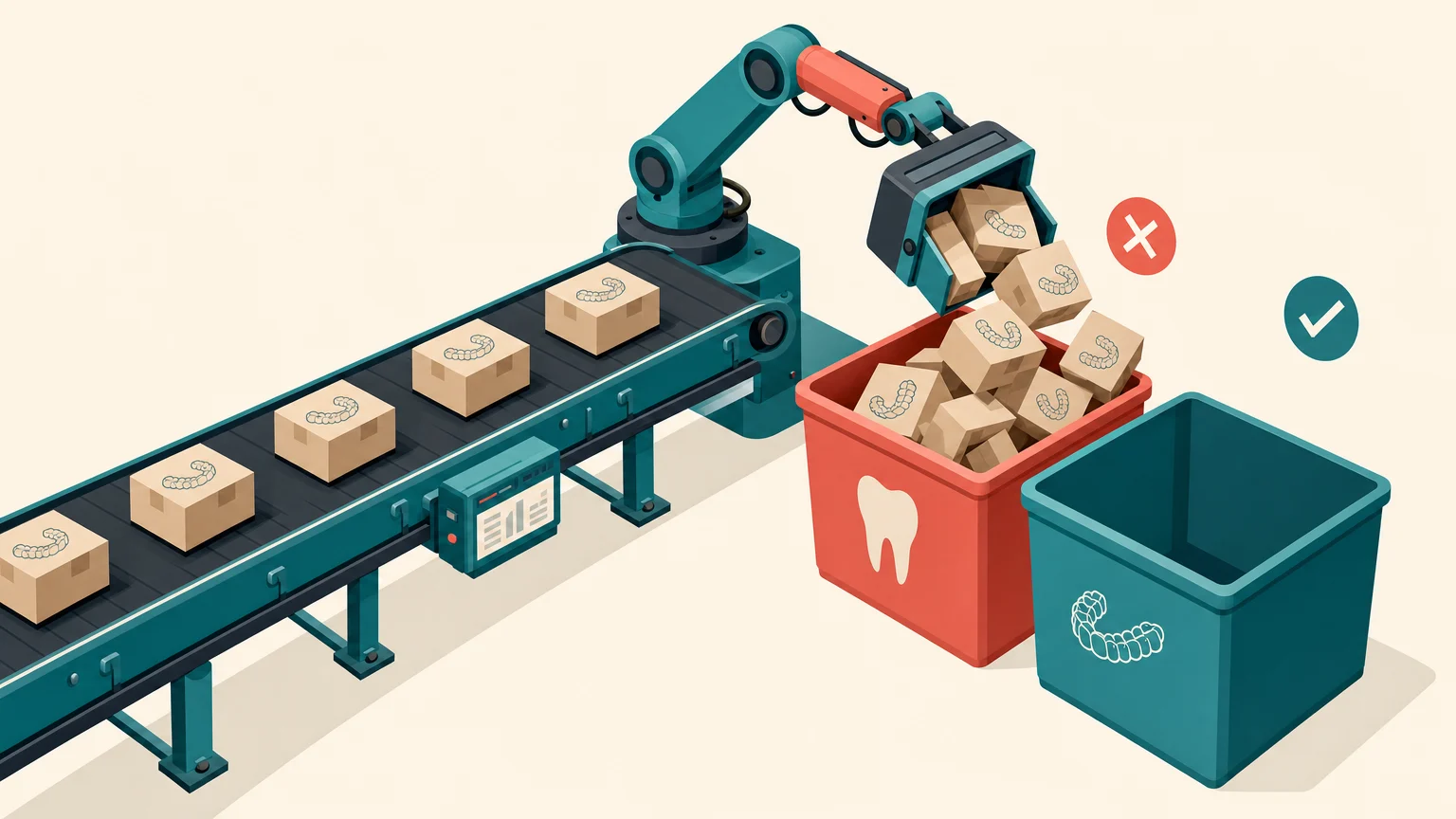
I'll start with the part that does not reflect well on us.
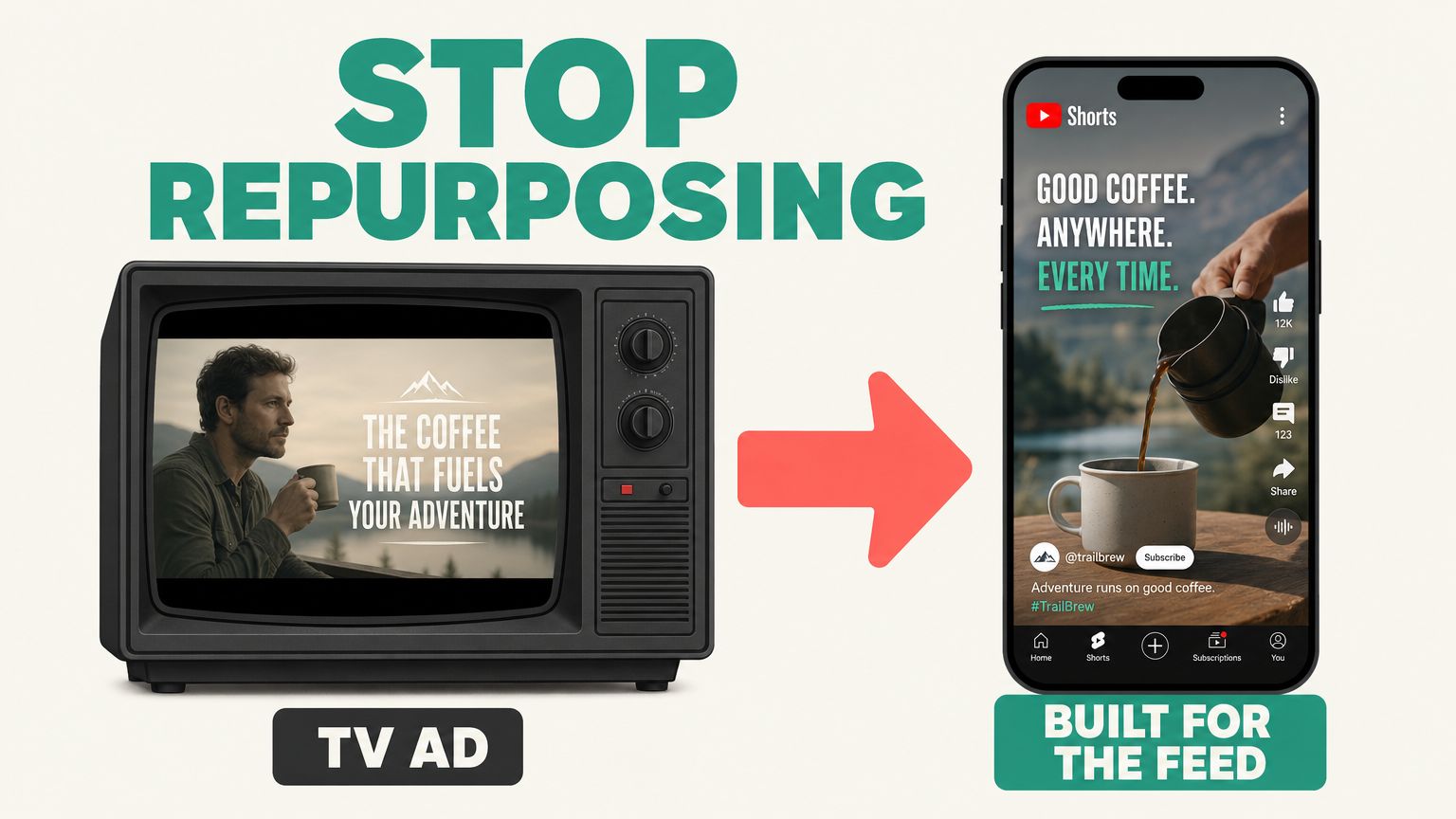
We have taken a video asset that was built for television, dropped it into a digital campaign, and run it. Not because we thought it would work. But because it was the asset that existed, the client had already paid for it, and the alternative was running no video at all.
The video did not perform, and it was not the targeting that was the problem.
At Google Marketing Live this year, a recorded segment from Tim Doyle played to the Brisbane room. Doyle is co-founder and CEO of Eucalyptus, the Australian digital health group behind Juniper and Pilot, and before that he ran marketing at Koala. His point was blunt: he could not believe how many companies still take their television commercial, upload it to YouTube, and expect it to do a job.
It stuck with me because I have watched it happen, and I have been part of it.
Why This Keeps Happening
It is not stupidity. It is sequence.
The video gets commissioned first, for a broadcast buy, with a production budget that makes it feel too valuable to leave sitting on a drive. Then somebody asks what else it can do.
So the asset decides the channel, instead of the channel deciding the asset. Everything downstream inherits that mistake.
Television Never Actually Made This Mistake
Here is the irony: what discipline digital marketing keeps losing is what television advertisers have had sorted for decades.
When I first moved to Australia in 2005, I worked at a Sydney research agency running ongoing brand tracking for Toyota. Their television activity was split into two clearly separate categories, with different briefs, different creativity, and different measures.
| Brand | Retail | |
|---|---|---|
| The job | Build long-term awareness, trust and desire | Move units this month |
| What it looks like | Feel-good, aspirational, no direct ask | "Run-out deals on now", end-of-financial-year, zero percent finance, no drive-away costs |
| The call to action | None, deliberately | Explicit, urgent, dated |
| How it was judged | Tracked awareness and brand measures | Sales in the window |
Nobody at Toyota would have judged a brand spot on how many Corollas moved that weekend. That would have been an obvious category error, and everyone in the room knew which type of ad they were briefing before anyone picked up a camera.
Digital did not inherit that discipline. It inherited the assets.
The problem is rarely that a business runs a brand video. It is that it runs a brand video inside a campaign built to count conversions and then judges it as though it were retail.
The TV Money Is Moving, But Not For The Reason You Have Been Told
I have watched almost no live television this year. What I did watch was the World Cup, and the only conventional TV advertising I saw all year came with it.
That is the anecdote everyone in marketing has, and it is the one I would be careful with, because the Australian data does not support the version people like to tell. VOZ measurement for Q2 2026 has Total TV still holding 60.4% of viewing on TV sets. YouTube on the TV set sits at 11.3%, just ahead of Netflix at 10.5%.
Television is not dead. It is divided, and that is a different problem with a different solution.
The real argument for a service business has almost nothing to do with which platform has the most eyeballs. It is about which one you can actually buy:
| Broadcast and BVOD | Premium streaming (Prime, Netflix) | YouTube | |
|---|---|---|---|
| Minimum realistic spend | High, and usually sold in packages | High, and relationship-led | Whatever you want it to be |
| Can you self-serve? | Rarely | No | Yes |
| Targeting control | Programme and daypart | Broad demographic | Query history, interest, audience, geography |
| Can you attribute a lead to it? | Barely | Barely | Yes, with the right tracking |
Most Australian service businesses cannot get into premium streaming inventory at all. It is reserved for brands with buying power. YouTube is the only large-scale video platform a mid-sized firm can walk up to and use on a Tuesday afternoon.
That is the reason to be there. Not because television died.
The Evidence For Video Is Strong. Read It Carefully Anyway.
The most useful research here is an analysis of the Advertising Council Australia effectiveness database, covering 550 Australian Effie Awards campaigns from 2018 to 2024, conducted by Robert Brittain of Robert Brittain Consulting. The headline findings are published on Think with Google:
- Campaigns without online video in the mix risk a 20% hit to performance.
- For budgets under $1M, reallocating 25% of social spend into online video made campaigns 30% more effective on average.
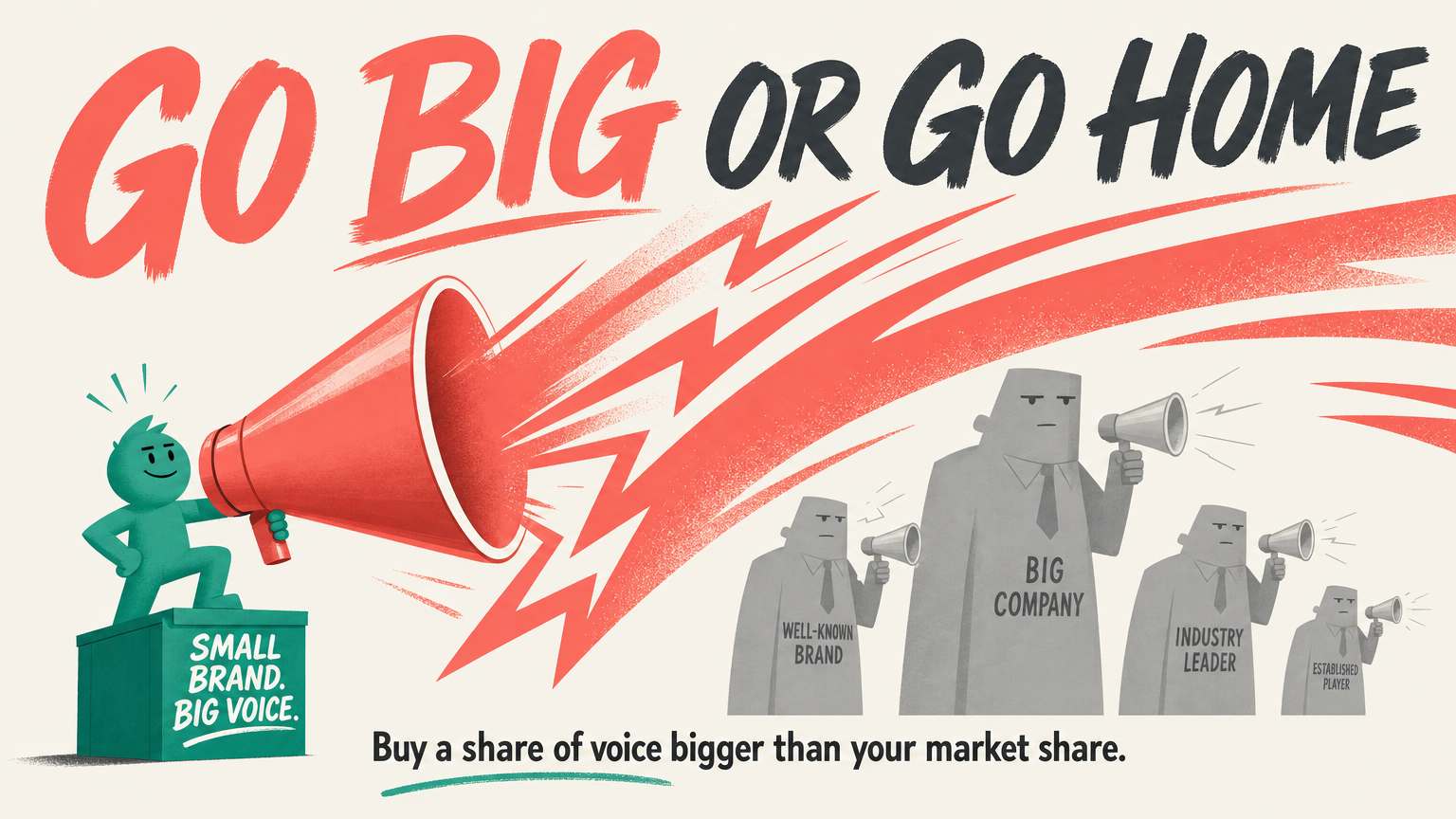
- On long-term market share, campaigns using online video scored 27% versus 15%.
Two honest caveats, because nobody else quoting these numbers seems to mention them.
First, the research was commissioned by YouTube. That does not make it wrong. Brittain is independent, and the Effie database is not Google's data. But read a favourable finding differently when the party that benefits paid for the question to be asked.
Second, the metric is "online video (non-social)", not YouTube specifically. YouTube is the largest way to buy that in Australia. It is not the only way, and the study does not claim it is.
The finding still holds, and the under-$1M number is the one worth sitting with: the smaller your budget, the more you gain by concentrating it into video rather than spreading it thinner across channels.
What A TV Ad Actually Gets Wrong On YouTube
This is the practical bit. A television asset is not merely "less good" on YouTube. It is built on assumptions that are false on the platform.
| The TV asset assumes | What is actually true on YouTube |
|---|---|
| The viewer is captive for 30 seconds | They can skip at 5 seconds, and most will |
| The brand reveal can wait until the end | If the brand is not in the first 5 seconds, it never lands |
| Sound is on, and the room is quiet | Sound is often on, but attention is not. It has to survive a thumbnail-sized moment |
| The ad's job is to be remembered later | On a lead-gen campaign, the ad's job is to make someone act now |
| No call to action is needed | A video with no ask gives the algorithm nothing to optimise towards |
That last row is the one that does the most damage, and it is the failure we see most often. A brand film with no ask is not a weak performance ad. It is not a performance ad at all, and running it in a campaign optimised for leads sets fire to the budget slowly enough that nobody notices for a quarter.
The Performance Max Trap
Here is where a weak video asset stops being a wasted line item and starts distorting your whole account.
Performance Max takes a single budget and spreads it across all of Google's inventory: Search, YouTube, Display, Discover, Gmail and Maps. You do not choose the split. You set an objective, usually a conversion action such as a form submission or an offline booking, and PMax decides where to spend to hit it. Getting onto YouTube at scale is the main reason to accept that trade.
Google is explicit that you should upload your own video in every format and that videos without audio perform significantly worse where sound is on by default.
Now follow what happens when the video is a repurposed TVC.
- It runs on YouTube inside your PMax campaign.
- It does not drive the conversion action you have set, because it was never built to ask for one.
- PMax observes that and does the rational thing: it moves budget to the channel that is converting, which is almost always Search.
- Your reporting shows PMax performing acceptably, so nobody investigates.
You now have a Search campaign wearing a Performance Max costume, and you have less control over it than if you had just run Search. You are paying the price of automation without getting the reach that was the entire reason to accept it.
What This Looked Like In A Real Account
Anonymised, but the pattern is exactly as it happened.
A multi-site operator in a considered-purchase service category:
High value, long deliberation, and a buying journey that turns almost entirely on getting someone to come and look at a location in person. The conversion action that mattered was a booked visit.
The only video assets they had were TVCs. Beautifully produced and almost completely disconnected from the product. Filmed largely outdoors, cheerful and aspirational, and never once showing you inside any of their actual locations. No call to action and nothing matching the booking the campaign was optimised for.
Those assets went into Performance Max. The same ones ran on Meta.
What followed are the four steps above, in order. The videos served across the inventory. They did not produce booked visits. Google stopped showing them. The budget consolidated back into Search.
So the single biggest reason to run PMax instead of Search, which is getting onto YouTube at scale, quietly evaporated. Not through a decision anyone made, but through an asset that could not do the job and a system that routed around it without telling anyone.
The account did not look broken. That is the trap, and it is the same one we covered in why AI Max backfires for service businesses without the right tracking. Hand control to an automated system, and it will optimise perfectly well towards a signal you did not mean to send.
The fix is not to abandon PMax. It is to stop feeding it video that cannot do a job, because PMax will not tell you.
You Are Not Eucalyptus, And You Do Not Need To Be
The obvious objection to Doyle's point is that Eucalyptus is a marketing-first company producing an enormous volume of content, and a six-partner law firm is not. Fair.
Volume is how a company like that finds what works. If you cannot buy volume, buy specificity. A firm that makes three genuinely native videos about the three questions clients actually ask on the phone will beat one polished brand film every time, at a fraction of the cost.
What "native" means with no in-house studio:
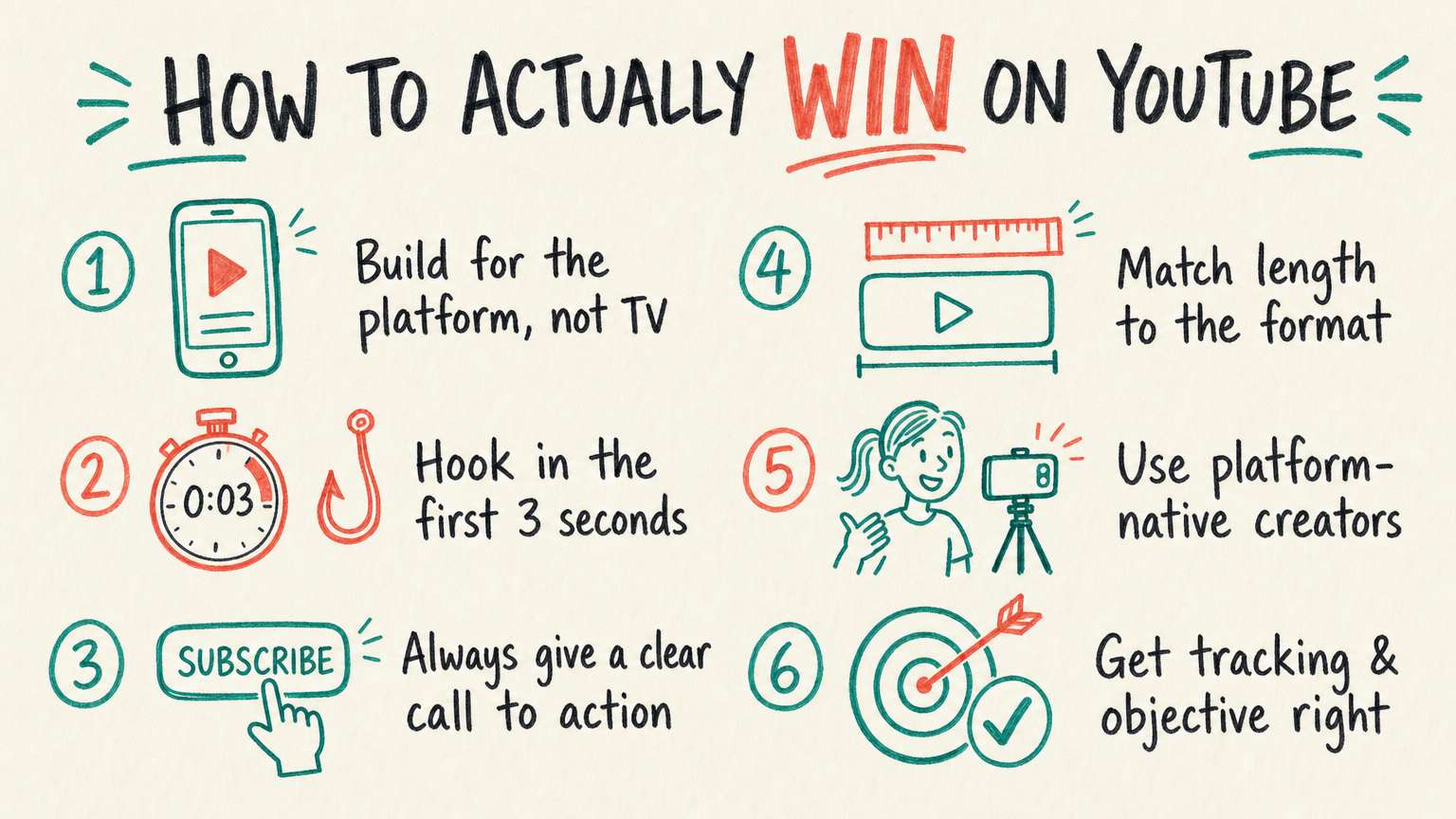
- Shot for the format. Vertical and square, because that is how it gets watched. Horizontal only is a broadcast habit.
- The point in the first five seconds. Not the logo. The problem the viewer has.
- One idea per video. A TVC carries a whole brand. A YouTube asset should carry one question.
- An actual ask at the end, matched to the conversion action the campaign is optimising for.
None of that needs a production company. It needs you to decide what the video is for before you shoot it.
If You Use Creators, Brief Them Like A Media Buyer
Creator content is the shortcut most service businesses reach for, and Google reported at GML that campaigns using creator assets perform around 20% better on average.
One warning, because I have been frustrated by this more than once. A creator who is excellent at organic content is not automatically good at paid content. It’s a different job, with different constraints and a different first five seconds.
The gap is almost never talent but rather the brief. Hand a creator a vibe and a product, and you get a video that would work beautifully on their own feed and die in an ad account.
Tell them the campaign type, the placement, the durations, the aspect ratios, and the exact action the campaign is optimised for. If they have not produced for that before, say so plainly and expect to spend a round getting it right. Work with creative partners who know the platforms and the campaign types, not just the craft.
Where Demand Gen Actually Fits
Demand Gen is Google's answer to the old forced choice between brand campaigns you cannot measure and conversion campaigns that only catch people already looking.
Google's own performance numbers from GML are strong. Treat them as vendor figures and test them on your own account.
The change actually worth watching is a Demand Gen-only attribution view, letting you see its conversions in isolation instead of always split across your Google mix. Google notes only about 40% of Demand Gen conversions land inside a 30-day window.
I suspect that view will make Demand Gen look considerably better than it currently does, because much of what it does is brand building with a halo that has always been credited elsewhere.
Before You Run Another Video
| Check | Where to look | What should worry you |
|---|---|---|
| Was this asset built for broadcast? | Ask who commissioned it and why | Anyone says "we already had it" |
| Does the brand or the problem appear in the first 5 seconds? | Watch it. Stop at 5. | You cannot tell what it is about yet |
| Is there a specific ask? | The final 5 seconds | It ends on a logo |
| Do you have vertical and square cuts? | Google Ads → Assets | Horizontal only |
| Is PMax actually spending on YouTube? | PMax campaign → Insights, by channel | Nearly all spend sitting in Search |
| Is the video optimised for the same action as the campaign? | Conversion action settings | The video asks for a call, the campaign optimises for form fills |
If the last two both fail, fix the asset before you touch a single targeting setting. The targeting is almost never the reason.
The Nuance
There is a version of "put the TV ad on YouTube" that is defensible, and it is the Toyota version. If you are running a genuine brand campaign, measuring brand outcomes, and using YouTube for reach rather than response, a well-made brand film is exactly the right asset. It is still worth recutting for the format.
That is the same distinction we draw in why the best service businesses run paid and organic together. Two channels can look identical on a media plan and be doing completely different jobs. The failure is not running both. It is judging both by the same number.
What does not work is running a brand asset inside a campaign optimised for leads and then judging it on cost per lead. That is not a creative failure or a platform failure. It is an asset doing a job it was never briefed for in a campaign that will quietly route around it.
The cheapest thing you can do this month is open your Performance Max campaign, look at where the money actually went, and ask whether your video ever really got a chance. If it did not, that is not a budget problem. It is a two-hour conversation about what the next video is for.
The client example in this article is based on a real account. The industry and identifying details have been changed to protect client confidentiality. The pattern, the diagnosis and the outcome are as they happened.
We are happy to look at your video assets and your PMax channel split with you and tell you plainly whether the creative is holding the account back or whether it is something else.
Book a time here: https://www.leadtree.agency/product/book-call